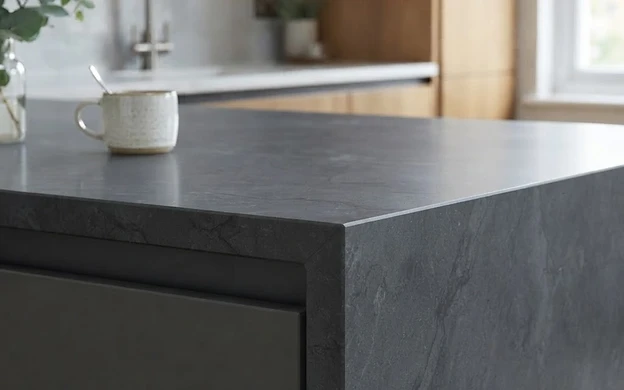
Mitered edges for a thick, solid look
A mitered joint makes a 20mm slab read as 40mm+ without the weight or the price. The trick is the lamination line.
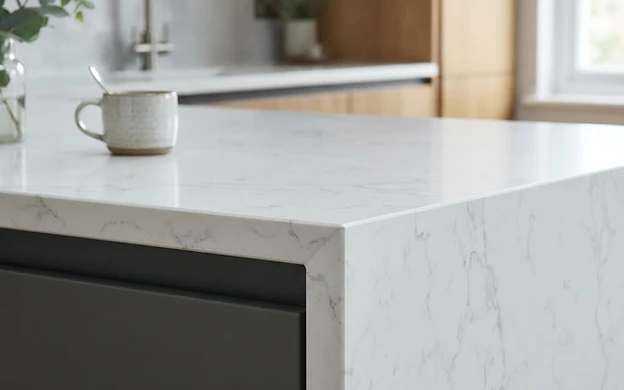
A mitered edge is a fabrication technique where two pieces of stone are cut at 45-degree angles and joined to form an L-shape — typically a 20mm worktop surface meeting a 20mm downstand. The result reads as a single, thick slab of 40mm or more, without the weight or the cost of a solid block.
The look is substantial and contemporary. A thick edge gives a worktop real presence — it reads as a piece of furniture rather than a thin surface laid on top of cabinets. It’s particularly effective on islands, where the edge profile is visible from all sides.
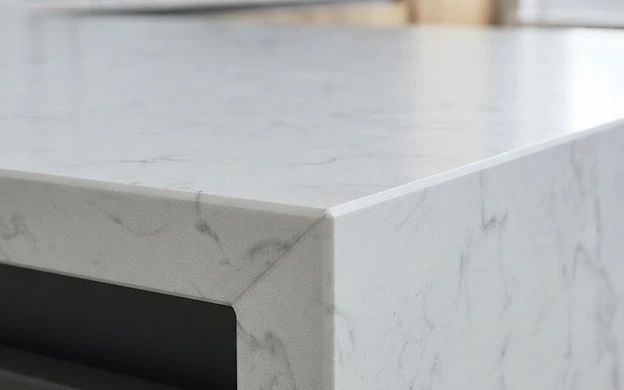
The trick is the lamination line. A skilled fabricator will match the grain and colour across the mitered joint so it’s nearly invisible. A poor one will leave a visible seam that spoils the effect. Always ask to see examples of a fabricator’s mitered joints before you commit — it’s the single best indicator of their craft.
Mitered edges add cost — typically 20–40% more than a standard square edge — because of the extra material and the precision cutting involved. But if you want the chunky, solid look without paying for a 40mm slab, it’s the most cost-effective way to achieve it. Pair it with a waterfall end for maximum impact.