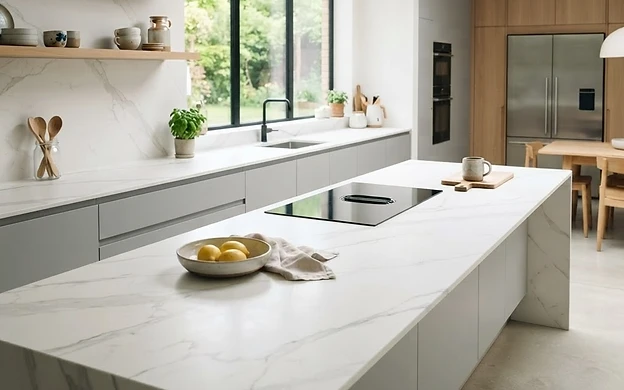
Porcelain slabs are going big
Large-format porcelain means fewer joints, thinner profiles and serious durability. What to ask your fabricator.
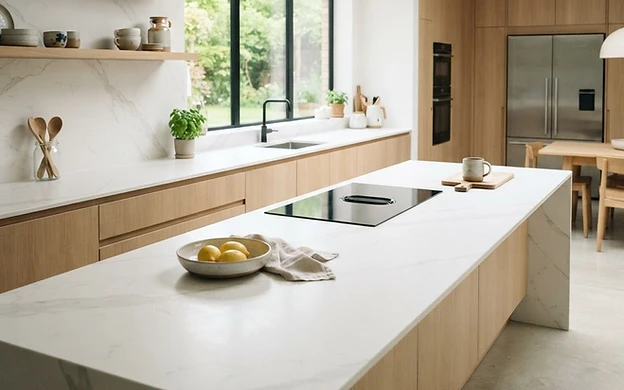
Large-format porcelain is the fastest-growing worktop material in the UK, and the reasons are practical as much as aesthetic. The slabs are getting bigger — 1.6m by 3.2m is now common — which means fewer joints on your worktop. Fewer joints means fewer places for crumbs, grease and bacteria to collect, and a cleaner, more continuous look.
Porcelain is also remarkably tough. It’s heat-resistant (you can take pans straight off the hob and set them down), scratch-resistant, UV-stable (it won’t fade in sunlight), and non-porous. It won’t etch from lemon juice or wine the way marble can.
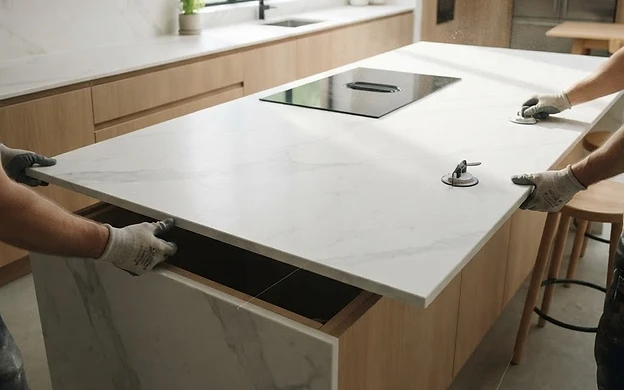
The thin profile is part of the appeal. Porcelain slabs are often just 12mm thick, which gives a sleek, modern edge — especially when mitered to read as a thicker slab. The downside is that thin porcelain is more fragile during fabrication and transport, so you need a specialist installer.
When you’re getting quotes, ask your fabricator three things: What’s the maximum slab size they can handle? Do they miter edges in-house? And can they do the cutouts for undermounted sinks without chipping? The answers tell you whether they’re set up for porcelain or just treating it like quartz.